March Is Where Money Resolutions Go to Die — Here's the Daily Fix

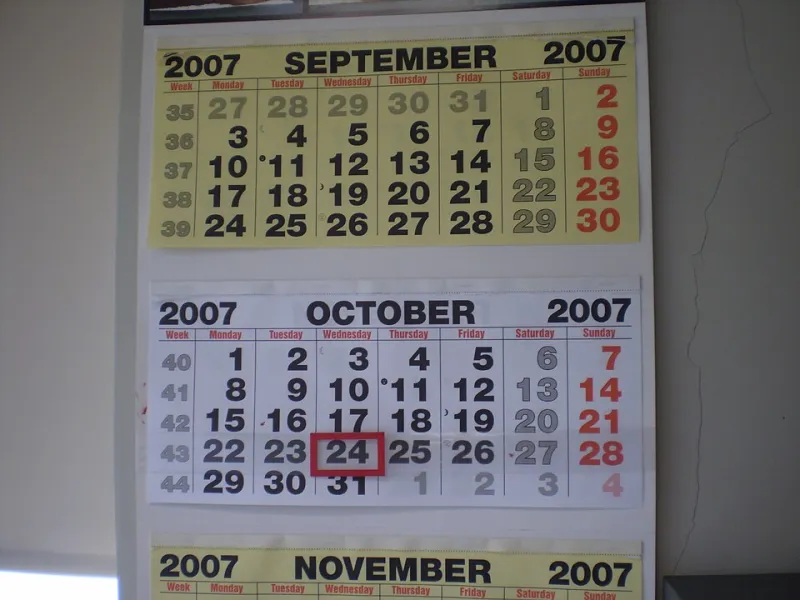
Photo: Rawpixel Ltd, CC BY 2.0, via Wikimedia Commons
There's a reason gyms are empty by mid-March and budgeting apps send their sad little 'we miss you' notifications around the same time. Annual resolutions are built on a flaw: they ask you to summon twelve months of willpower in one moment, usually at 11 PM on December 31st.
But money doesn't happen once a year. It happens 365 times — every swipe, every autopay, every 'add to cart' at midnight. Which raises the obvious question: why do we manage it like an annual event?
At Kesef365, we think the calendar itself is the answer. Not the year. The day.
The Math of Giving Up
Here's what typically happens with a January resolution: you set a big goal ("save $5,000 this year"), feel great for three weeks, hit a rough patch in February, and by March the whole thing feels broken. One bad month poisons the entire plan.
A daily habit works differently. If you check in with your money for five minutes a day and you miss four days in a row, you've lost 20 minutes — not a year. The stakes per day are so low that failure can't compound the way it does with resolutions.
That's not motivational fluff. It's structural. Resolutions are brittle because they're all-or-nothing. Daily habits are resilient because they're always resumable.
Three Households, One Experiment
We followed three families through a 90-day experiment: ditch the annual goal, replace it with a five-minute daily money check-in.
The Garcias (Ohio, two kids, dual income): Their resolution had been "spend less on takeout." It failed every year. Their daily check-in was simpler: look at yesterday's spending and name one number out loud. No judgment, no lectures. Within six weeks, takeout spending dropped about 30% — not because they forced it, but because nobody enjoys saying "$64" out loud two days in a row.
Dana (single, Austin, freelance): Dana's problem was income anxiety, not spending. Her daily habit was a 60-second look at her accounts plus writing down one money task for tomorrow. The surprise? The tasks got smaller and more doable. "Call about the insurance bill" became "find the insurance bill," which became "open the email." Ninety days of tiny tasks cleared a backlog she'd been avoiding for two years.
The Whitfields (retired, Florida): They used their check-in to track one thing: their checking account balance trend. Up, down, or flat? That's it. But watching the trend daily made them notice a $12.99 subscription they'd forgotten and a utility bill that had quietly doubled. Annual reviews find those things eventually. Daily glances find them in days.
What a Five-Minute Check-In Actually Looks Like
You don't need an app, a spreadsheet, or a finance degree. You need a ledger — paper works fine — and five minutes. Here's the template our readers have been printing out:
The Daily Money Ledger
- Date: ______
- Yesterday's spending (one number): $______
- Anything surprise you? Y / N
- One money task for tomorrow: ______
- Mood check (1–5): ______
That's the whole thing. The mood line matters more than it sounds — most money mistakes are mood mistakes, and after a few weeks you'll see the pattern yourself. Stress Tuesday? That's when the impulse orders happen.
Print a month of these, keep them on the counter or in your bag, and clip them together. At the end of the month you'll have 30 data points — more honest insight than any annual budget review has ever given you.
The March Reset
If your New Year's money plan is already in a ditch, good news: you don't need to wait for January. That's the whole scam of resolutions — they pretend there's only one reset day per year.
There are 365. You're standing on one of them right now.
Start tonight. One number, one task, five minutes. Do it tomorrow. Miss a day? Do it the day after. By the time the next January rolls around, you won't need a resolution — you'll have a habit, and habits don't expire.
The year isn't a goal you set once. It's a ledger you write daily. Kesef365 — smart money, every day of the year. Including this one.